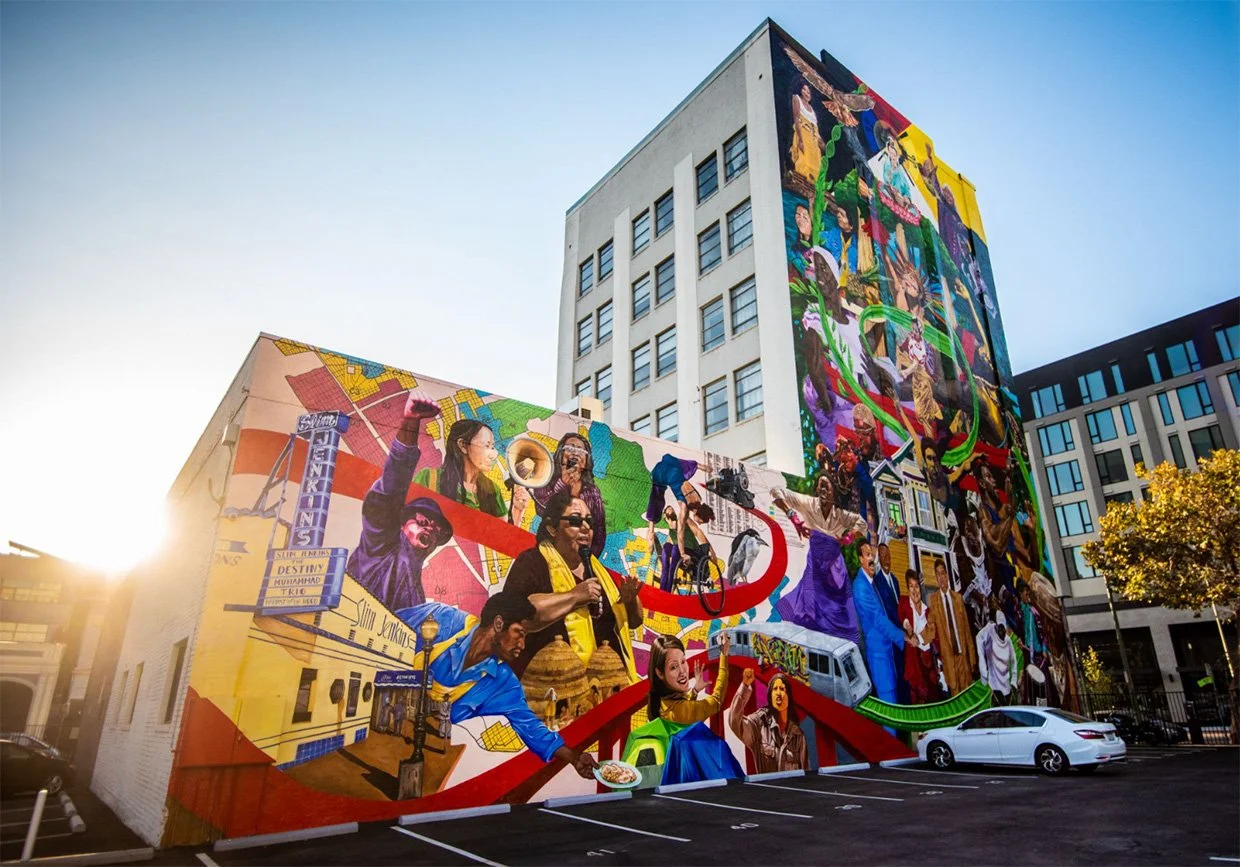
Research proves that murals transform urban communities by advancing equitable development, creating restorative justice opportunities, fostering creative placemaking initiatives, and boosting economic growth.
TOP BENEFITS OF MURALS
EQUITABLE
DEVELOPMENT
1
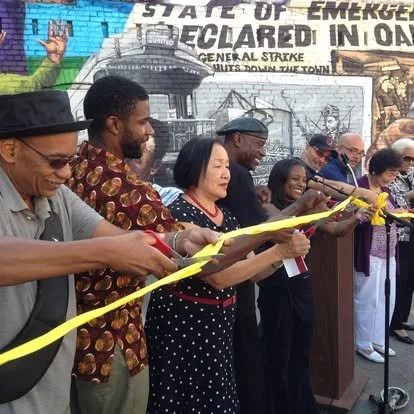
The concept of equitable development demonstrates that the detrimental aspects of development, such as displacement and culture shift, can be mitigated through focusing on and realizing equitable outcomes.
Our mural projects advance equitable development by prioritizing community-led initiatives that ensure diverse voices shape urban planning and policy. Our work emphasizes multicultural solidarity—ensuring that community stakeholders have a seat at the table, and working with both private developers and city officials and staff. This approach ensures long-term outcomes which increase baseline equity and community participation in decision-making processes.
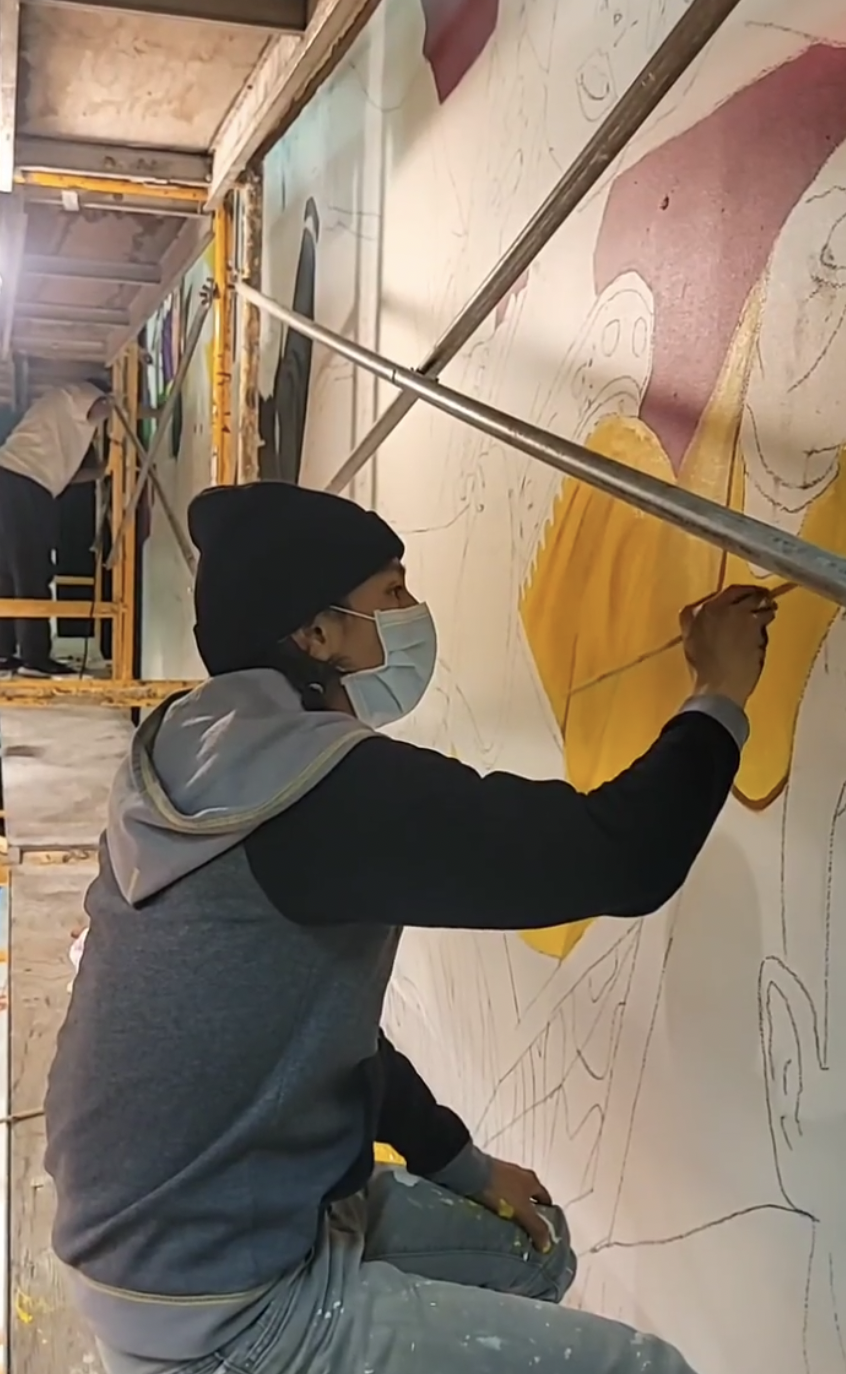
Restorative justice is an approach to justice that focuses on repairing the harm caused by criminal behavior through inclusive processes that engage all stakeholders, emphasizing accountability, healing, and community involvement.
Because of CRP’s ability to engage with youth as well as community stakeholders, our murals are uniquely positioned to enact restorative justice programs which present alternatives to harsh punitive measures, create a career path for artist development, and reduce blight while beautifying the locations they are painted in. Because it is statistically and realistically impossible for urban cities to achieve zero-tolerance goals in vandalism reduction, our best practices entail implementing and expanding mural diversion programs, instead of continuing to feed the abatement black hole and criminalizing youthful offenders (who are often disproportionately low-income residents of color).
2
REstorative
justice
3
CREATIVE
PLACEMAKING
Creative placemaking is the practice of integrating arts and culture into urban development, rooted in the belief that artists and arts organizations can literally shape the social, physical, and economic characters of their communities.
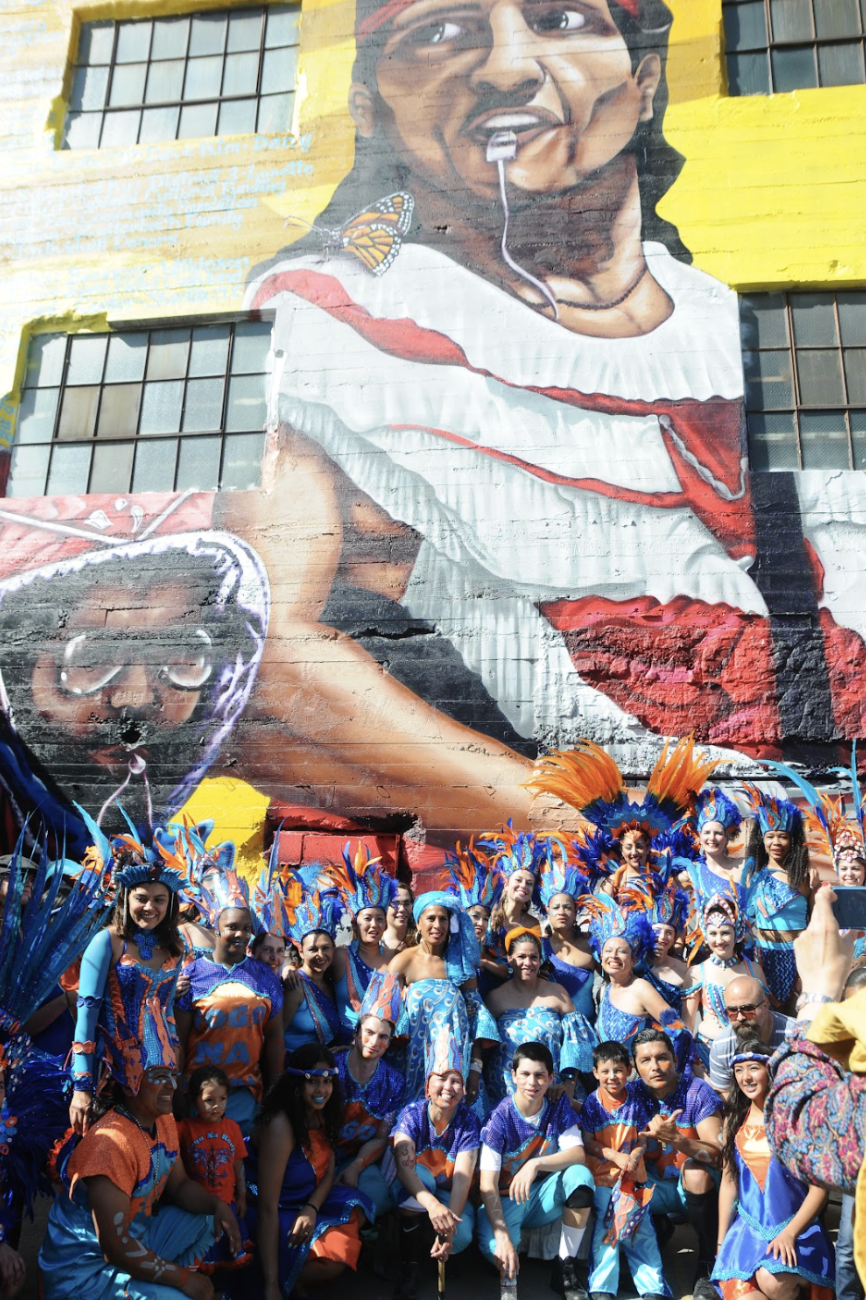
Murals create a tangible sense of place & destination, adding color, vibrancy, and character to an urban environment while increasing foot traffic. Murals contrast the negative mental health effects of concrete and asphalt and can thus offer therapeutic benefits to area residents. Murals which reflect the communities they are located in integrate visual iconography, social and cultural commentary, and inspirational and aspirational goals into the built environment. In this way, murals visibly highlight the history of a neighborhood and/or the social, cultural, and political values of its residents.
Murals can serve as catalysts for neighborhood revitalization efforts. When a community invests in public art, it signals that this is a place worth developing and investing in. Therefore, balanced growth that considers social equity & sustainability is crucial for the long-term prosperity of urban communities.
Murals have the remarkable ability to transform bland and neglected spaces into urban masterpieces. They breathe life into neighborhoods, making them more attractive and enjoyable. Property values tend to rise in areas adorned with public art, allowing homeowners to see their investments appreciate. Murals in emerging arts districts help define the district, lend it a distinct sense of character and identity, can uphold neighborhood history and cultural heritage, and create a tangible sense of destination, which in turn can drive foot traffic and tourism.